Welcome to Sugnana Gurukulam
The wealth of knowledge is the most superior wealth of all
Welcome to Sugnana Gurukulam
The wealth of knowledge is the most superior wealth of all
Unlocking Spiritual Wisdom
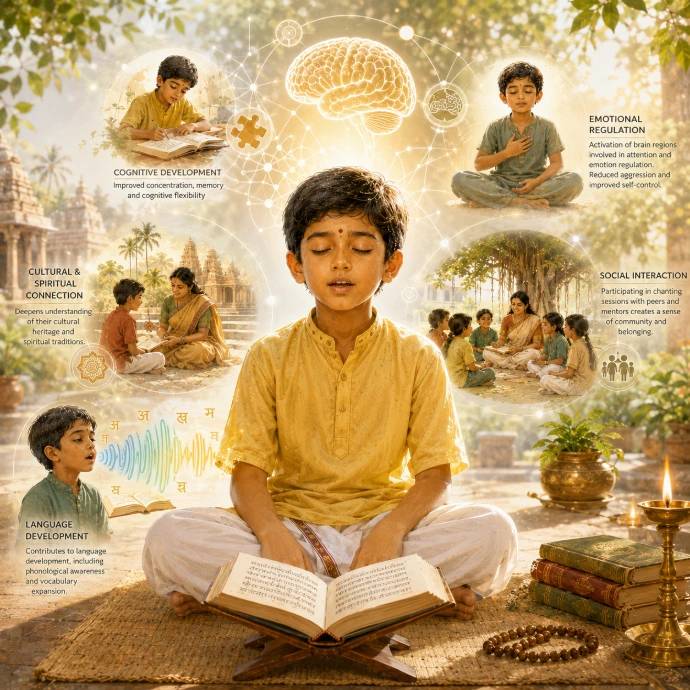
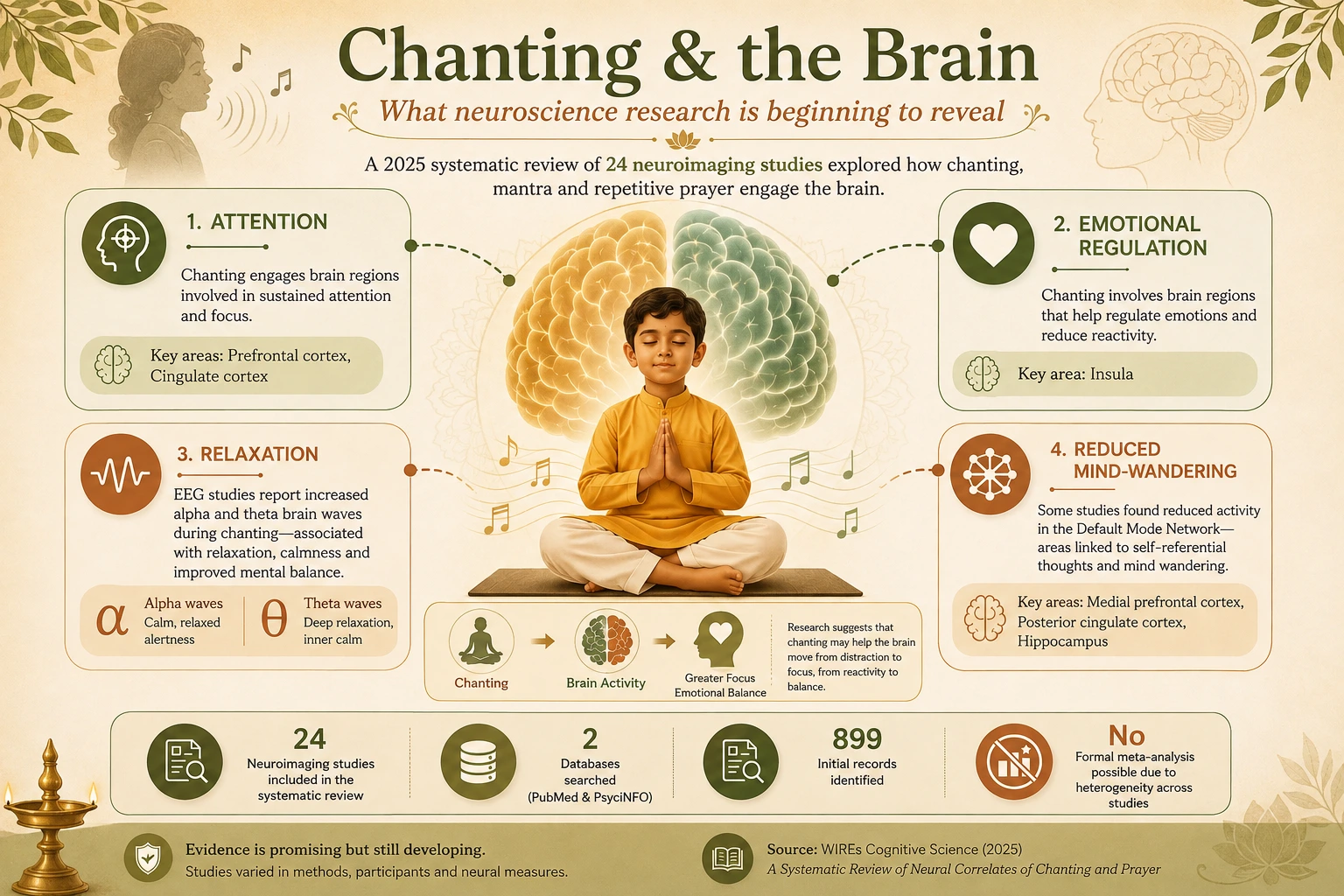
Several studies conducted in the domain of cognitive neuroscience & psychology have explored the effects of chanting on mental well-being.
Cognitive Development: Improved concentration, memory and cognitive flexibility in kids.
Emotional Regulation: Activation of specific brain regions involved in attention and emotion regulation. Reduced aggression and improved self-control.
Cultural and Spiritual Connection: Deepens understanding of their cultural heritage and spiritual traditions.
Social Interaction: Participating in chanting sessions with peers and mentors can create a sense of community and belonging.
Language Development: Contributes to language development in children, including phonological awareness & vocabulary expansion.
What does research tell us?
A 2025 systematic review synthesized 24 neuroimaging studies and found recurring neural involvement in networks associated with attention and emotional regulation. The authors also highlighted substantial methodological variation and called for more rigorous research
Read the 2025 systematic review — WIREs Cognitive Science
Harnessing Efficiency of Vedic Mathematics
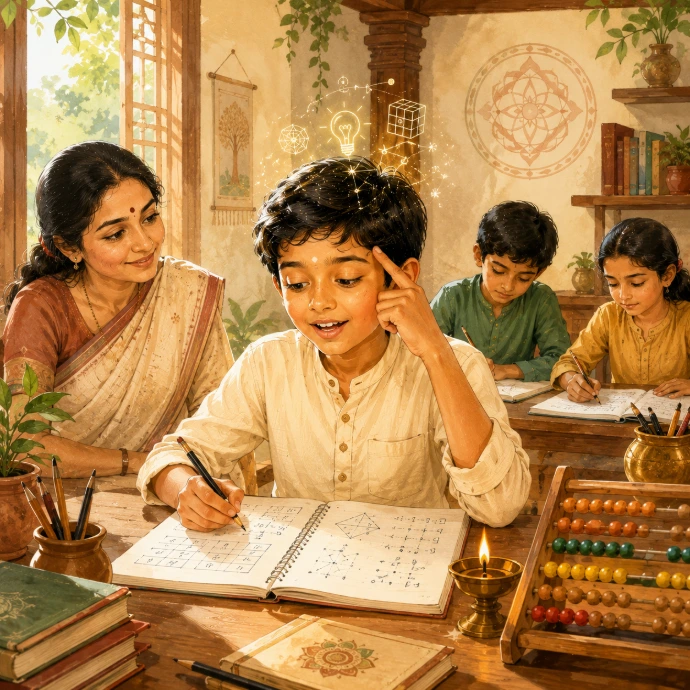
Vedic Mathematics is a collection of methods or sutras to solve numerical computations quickly and faster.
Mental Calculation: Vedic mathematics offers a plethora of mental calculation techniques that enable rapid computation without the need for pen and paper.
Speed: Individuals can significantly increase their calculation speed, allowing for quicker problem-solving in various mathematical domains.
Accuracy: Vedic mathematics emphasizes precise techniques that ensure accurate results even with rapid calculations.
Competitive Exams: For students preparing for competitive exams, proficiency in Vedic mathematics can be invaluable in saving time during examinations, thus increasing the likelihood of success.
Practical Application: Speed and accuracy gained will transcend academic settings & train the brain to make quick decisions in professional field too.
Students
Countries
What sets us apart?
Shloka and Vedic chanting serve not only as a means of preserving ancient traditions but also as a pathway to personal growth and spiritual awakening. We not only teach the traditional Sanskrit verses but also imbue students with a deeper understanding and appreciation of the rich cultural and spiritual heritage.
Pauranik Storytelling: Puranic storytelling offers a window into the rich tapestry of Hindu mythology and tradition. Many Puranic stories impart timeless moral and ethical lessons that are relevant to students' lives. Students' glean valuable insights into virtues such as compassion, courage and humility.
Why Pauranic Stories?
Imagination • Empathy • Values • Moral reasoning • Cultural literacy
Stories That Teach What Textbooks Cannot
Children naturally learn through stories. Pauranic stories have been passed from one generation to another not merely as tales of gods, kings and heroes, but as powerful narratives exploring courage, compassion, humility, wisdom, responsibility, friendship, perseverance and the consequences of our choices. At Sugnana Gurukulam, these stories become a starting point for meaningful conversations.

From Story to Reflection
A child doesn't simply hear a story. They begin to ask:
How does this apply to my life today?
Through storytelling, children encounter ethical dilemmas, different perspectives and timeless human values in a form they can understand and remember.
What Pauranic Storytelling Can Nurture?
Stories of perseverance, courage and difficult choices can give children meaningful examples of facing challenges.
We don't want children to merely memorize stories, We want them to think about them.
Because the most valuable lesson in a story may not be the answer. It may be the question it leaves in a child's mind.

Ancient Wisdom. Modern Childhood.
Children today are growing up in a world of extraordinary opportunity — and extraordinary distraction.
They have access to more information than any generation before them.
But information alone does not teach a child how to focus, how to reflect, how to make thoughtful choices, how to understand where they come from, or how to live with others.
This is where timeless wisdom can still have a place.
Sugnana Gurukulam creates opportunities for children to encounter India's rich intellectual and cultural heritage through shlokas, stories, mathematics, festivals, language and meaningful interaction.
Not as a return to the past.
But as a way of carrying the best of the past forward.
What Are We Really Giving Our Children?
In a rapidly changing world, parents naturally want their children to be confident, capable and future-ready.
But they also want them to know who they are and where they come from.
Sugnana Gurukulam seeks to bring these two aspirations together.
A child who can think independently.
A child who can listen deeply.
A child who respects others.
A child who knows their heritage.
A child who can carry timeless values into a changing world.
That brings together emotional well-being, cultural heritage, strong character and the skills children need to thrive in the future.

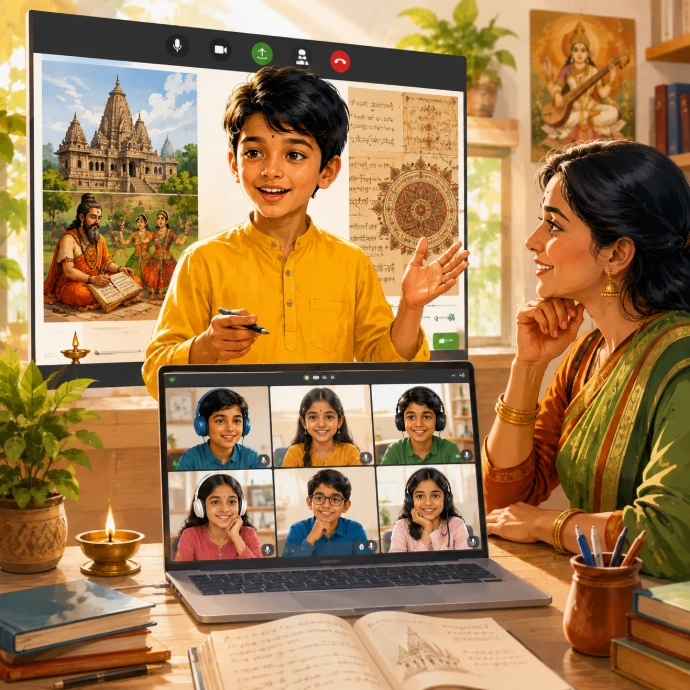
Active Engagement: Quizzes serve as a dynamic tool to actively engage students in their learning process. Rather than simply recalling information, well-designed quizzes encourage children to listen, remember, connect ideas and think independently.
Festivals & Cultural Awareness: Exploring the stories, traditions and significance behind Indian festivals gives children an opportunity to understand the ideas, values and cultural practices that have been carried across generations. Instead of experiencing festivals only as celebrations, children learn to appreciate their meaning, symbolism and diversity, developing a stronger sense of cultural connection, respect and belonging.
Encouraging Critical Thinking and Cultural Presentation: Children learn more deeply when they have an opportunity to question, interpret, discuss and express their own understanding. Through cultural presentations, storytelling, discussions and interactive activities, students are encouraged to organize their thoughts, consider different perspectives and communicate their ideas with confidence. This transforms them from passive learners into active participants in their own learning journey.
Learning Beyond the Textbook : At Sugnana Gurukulam, learning is not limited to memorizing information. We create opportunities for children to participate, question, explore, express and connect — helping them develop not only knowledge, but also confidence, curiosity, cultural awareness and the ability to think for themselves.